

Supportive Palliative Care (SPC) vs Hospice
Supportive Palliative Care vs. Hospice: What’s the Difference?
When facing a serious illness, patients and families are often introduced to new terms and unfamiliar care options. Two services that are commonly misunderstood are Supportive Palliative Care (SPC) and Hospice Care. While both focus on comfort and quality of life, they are designed for different stages of illness and different patient needs.
At Mosaic Healthcare, our goal is to provide clarity, guidance, and compassionate care, so patients receive the right support at the right time.

What Is Supportive Palliative Care (SPC)?
Supportive Palliative Care (SPC) is a specialized medical approach focused on helping people feel more comfortable and supported while living with a serious or complex illness. The goal is to relieve symptoms, reduce stress, and improve quality of life for both patients and their families.
This type of care often includes regular follow-ups to check in on how patients and families are doing, address new or ongoing concerns, and help connect them with helpful resources after discharge. Conversations about goals of care and advance care planning are also a key part of Supportive Palliative Care, giving individuals and families a clearer understanding of their options and helping ensure care aligns with what matters most to them.
Supportive Palliative Care meets patients where they are in their illness journey. It is usually provided right after a hospital, SNF, or rehab stay. However, palliative care can also be provided at any stage of illness and can occur alongside treatments focused on curing the disease or extending life.
Key Features of Supportive Palliative Care
- Available at diagnosis and throughout the full disease course
- Provided alongside treatments such as chemotherapy, dialysis, or surgery
- Focused on symptom management (pain, shortness of breath, fatigue, nausea, anxiety, insomnia, GI symptoms)
- Emphasizes goals‑of‑care conversations to align treatment with patient values

Supportive palliative care is not about giving up; it is about living better during treatment.
Core Services of Supportive Palliative Care
Patients receiving SPC from Mosaic Healthcare benefit from coordinated, expert medical support, including:
- Medication review and optimization
- Advanced pain management
- Symptom control for complex or persistent symptoms
- Care coordination with primary care providers and specialists
- Clear communication with patients and families
- Reduced ER visits and hospitalizations through proactive care
Studies consistently show that early palliative care leads to better symptom control, improved patient satisfaction, and higher quality of life.
What Is Hospice Care?
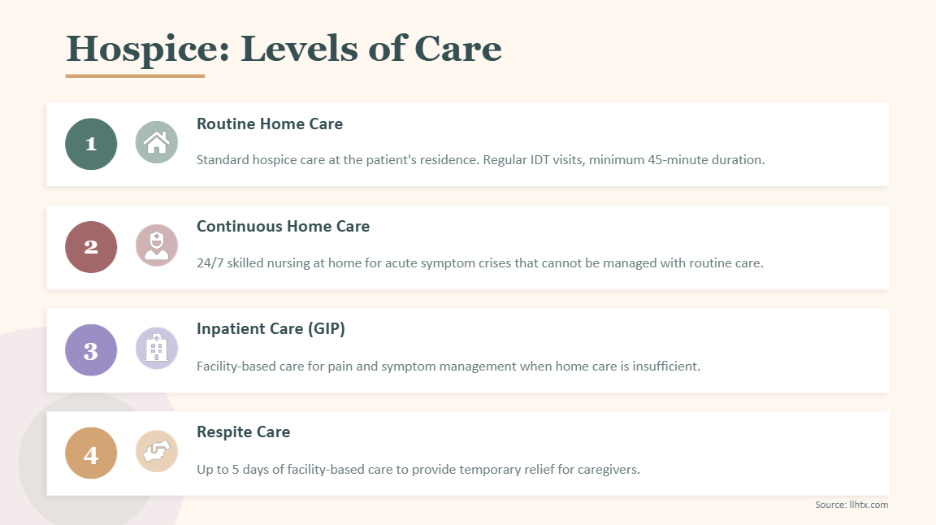
Hospice care is a specialized type of medical care for people who are nearing the end of life, typically when a serious illness is no longer responding to curative treatment. The focus of hospice care is comfort, relieving pain and symptoms, providing emotional and spiritual support, and helping patients live as fully and peacefully as possible.
Hospice care supports both patients and their families by addressing physical, emotional, and practical needs. Care is usually provided wherever the patient considers home, such as a private residence, nursing facility, or assisted living community. A dedicated care team often includes nurses, physicians, social workers, chaplains, and other professionals who work together to provide compassionate, coordinated support.
Key Features of Hospice Care
- For patients with a terminal prognosis (≤ six months)
- Curative treatments are discontinued and the focus shifts to comfort care
- Care is provided wherever the patient lives
- Medications related to the terminal condition are fully covered
- Delivered by a full interdisciplinary care team (IDT): Physicians, nurses, aides (CNA’s), chaplains, social workers, and volunteers.
Hospice is not the absence of care; it is the most comprehensive form of comfort focused support.
Settings of Care: Where Services Are Provided

Supportive Palliative Care Settings
- Outpatient clinic (primary setting)
- Hospital inpatient consult
- Nursing home (limited)
- Occasional home visits (rare)
Hospice Care Settings
- Patient’s home (most common)
- Assisted living facilities
- Skilled nursing facilities
- Inpatient hospice or hospital units (GIP)
Key Difference: Hospice comes to wherever the patient lives and moves with them. Palliative care is primarily provided in inpatient and some clinic settings.
Who Is on the Care Team?
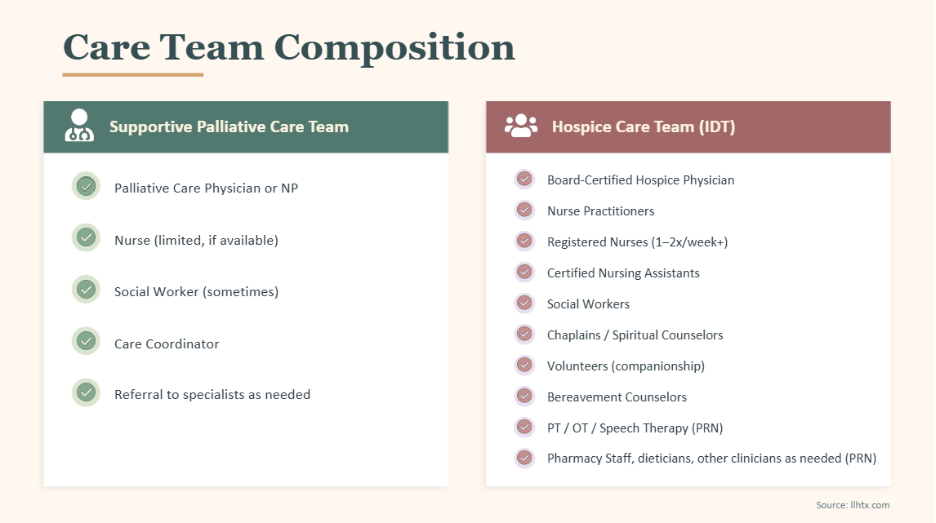
Hospice offers the most comprehensive team‑based support available for end‑of‑life care. However, for patients who are not at that point, SPC can be very beneficial to align goals of care and provide symptom and pain management.
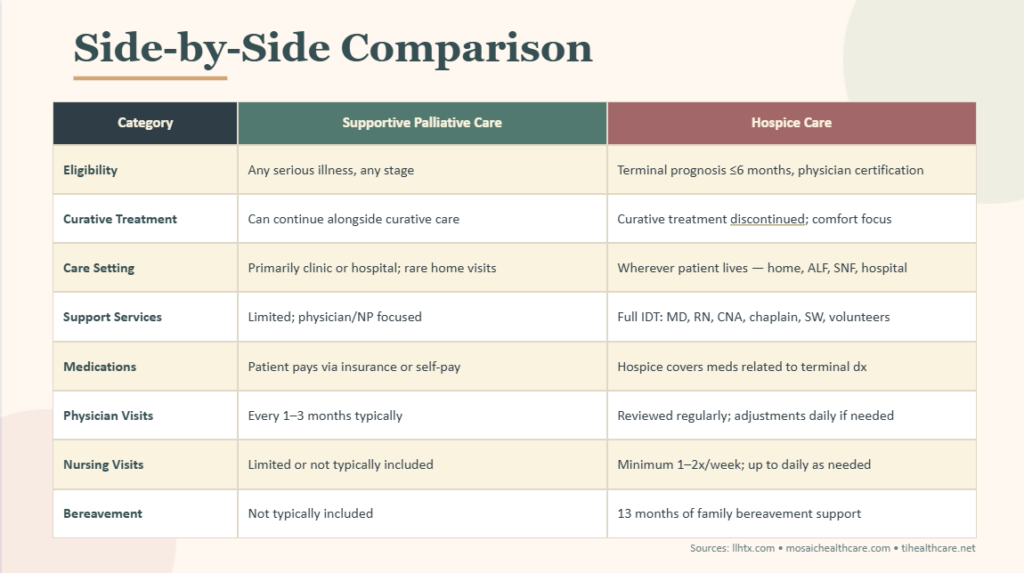
Supportive Palliative Care vs. Hospice: A Quick Comparison
Understanding the Spectrum of Comfort‑Focused Care
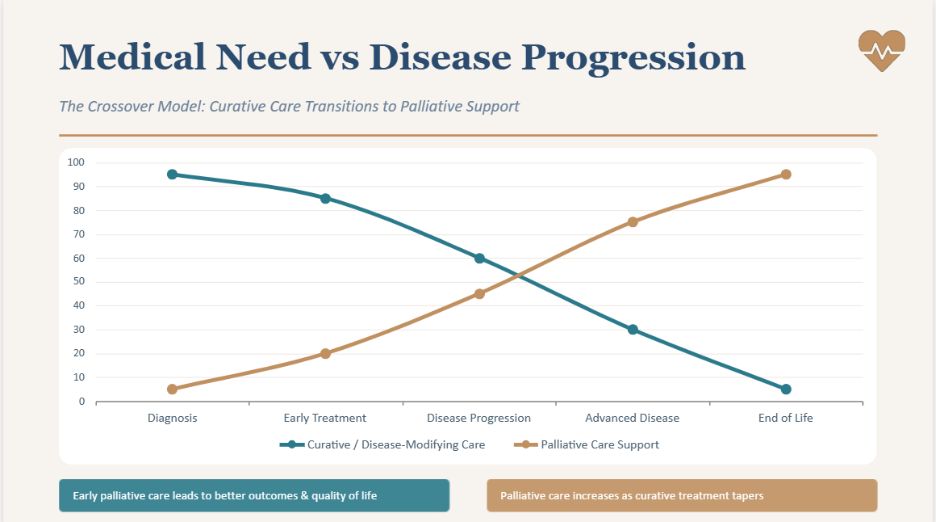
Care exists along a continuum:
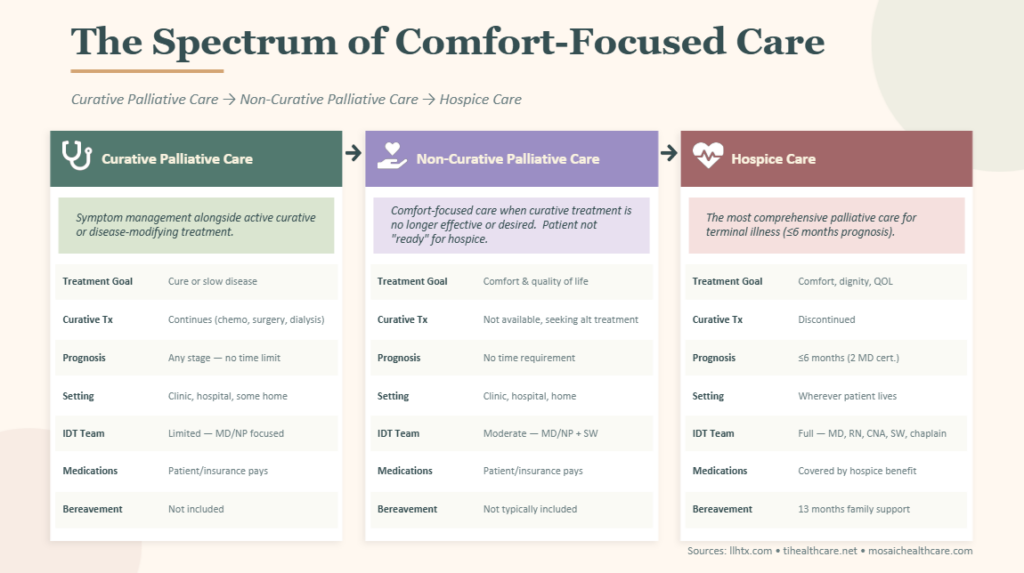
As disease progresses, comfort‑focused care appropriately increases, making early palliative involvement essential.
When Should a Referral Be Made?
Refer to Supportive Palliative Care When:
- Serious illness with significant symptom burden
- Uncontrolled pain or distressing symptoms
- Need for goals-of-care clarification
- Complex medication management needed
- Frequent ER visits or hospitalizations
- Patient/family need support navigating options
- Curative Tx causing quality-of-life decline
Refer to Hospice Care When:
- Terminal prognosis of ≤6 months
- Curative treatments exhausted or declined
- Frequent hospitalizations for same condition
- Declining ability to perform ADLs
- Progressive weight loss or functional decline
- Patient/family choosing comfort over cure
- Uncontrolled symptoms despite max medical Tx
Early referral allows patients to receive maximum benefit from both services.
Insurance Coverage & Costs
Key Takeaways
- Hospice is on the spectrum of palliative care, the most comprehensive, most intensive version of comfort-focused care.
- Supportive Palliative care is appropriate at any stage of serious illness and runs alongside curative treatment.
- Hospice requires a terminal prognosis (≤6 months) and shifts focus entirely to comfort and quality of life.
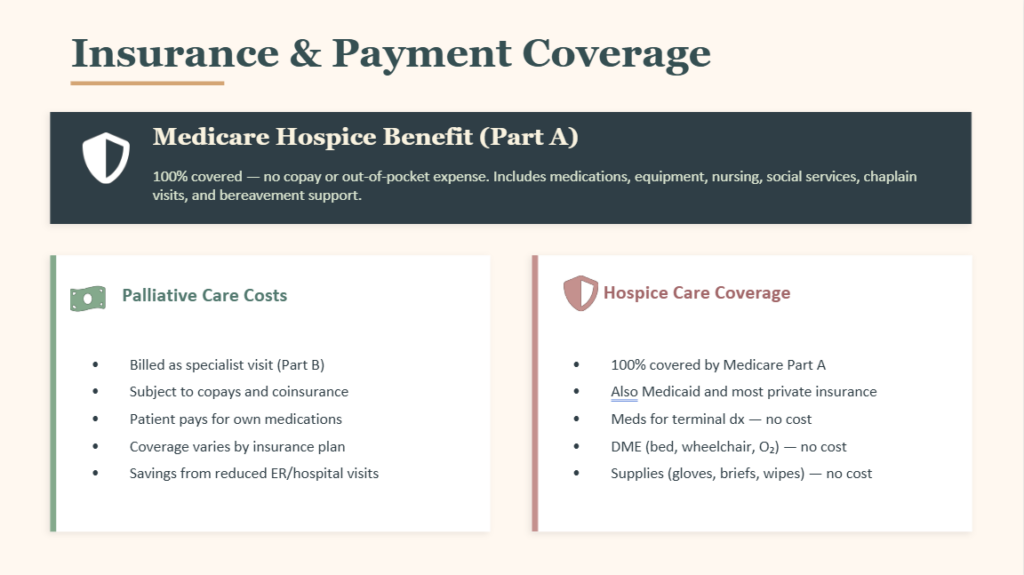
- Hospice is 100% covered by Medicare Part A with no out-of-pocket cost to patients.
- Earlier referral to both services leads to better symptom control, reduced hospitalization, and improved quality of life.
- Hospice does not mean giving up. It means choosing to live fully with the best possible support.
Compassionate Care, Every Step of the Way

At Mosaic Healthcare, we believe patients deserve comfort, clarity, and dignity throughout their healthcare journey. Whether someone is newly diagnosed or facing advanced illness, our team is here to provide expert, compassionate support.
Contact Mosaic Healthcare today to learn more about Supportive Palliative Care and Hospice services and find the right care for you or your loved one.
Call us at 469-757-1600 or email us at info@mosaichealthcare.com.